


Search for synthetic essential oils and you will find a muddle of product pages, forum arguments and confident claims. Let us untangle it, because the confusion about synthetic fragrance affects what you buy for candles, diffusers and room sprays.
In this guide
The short version: a true essential oil is distilled or pressed from a plant. A synthetic fragrance is made in a lab. The two can smell similar, and each has real strengths. The trouble starts when a label blurs them.
Are synthetic essential oils a real thing?
Strictly speaking, no. The term “essential oil” refers to an aromatic extract taken from plant material, usually by steam distillation or cold pressing. Something made in a lab is better described as a fragrance oil, an aroma oil or a nature-identical or synthetic fragrance.

So when a product says synthetic essential oils, it is usually describing synthetic fragrance in shorthand, or it is sloppy marketing. We would read that phrase as a prompt to check the ingredients list, not as a promise of anything. The Wikipedia article on essential oils explains how the real ones are made.
Why makers use synthetic fragrance at all
Synthetic ingredients are not automatically the villain. They exist for good reasons.
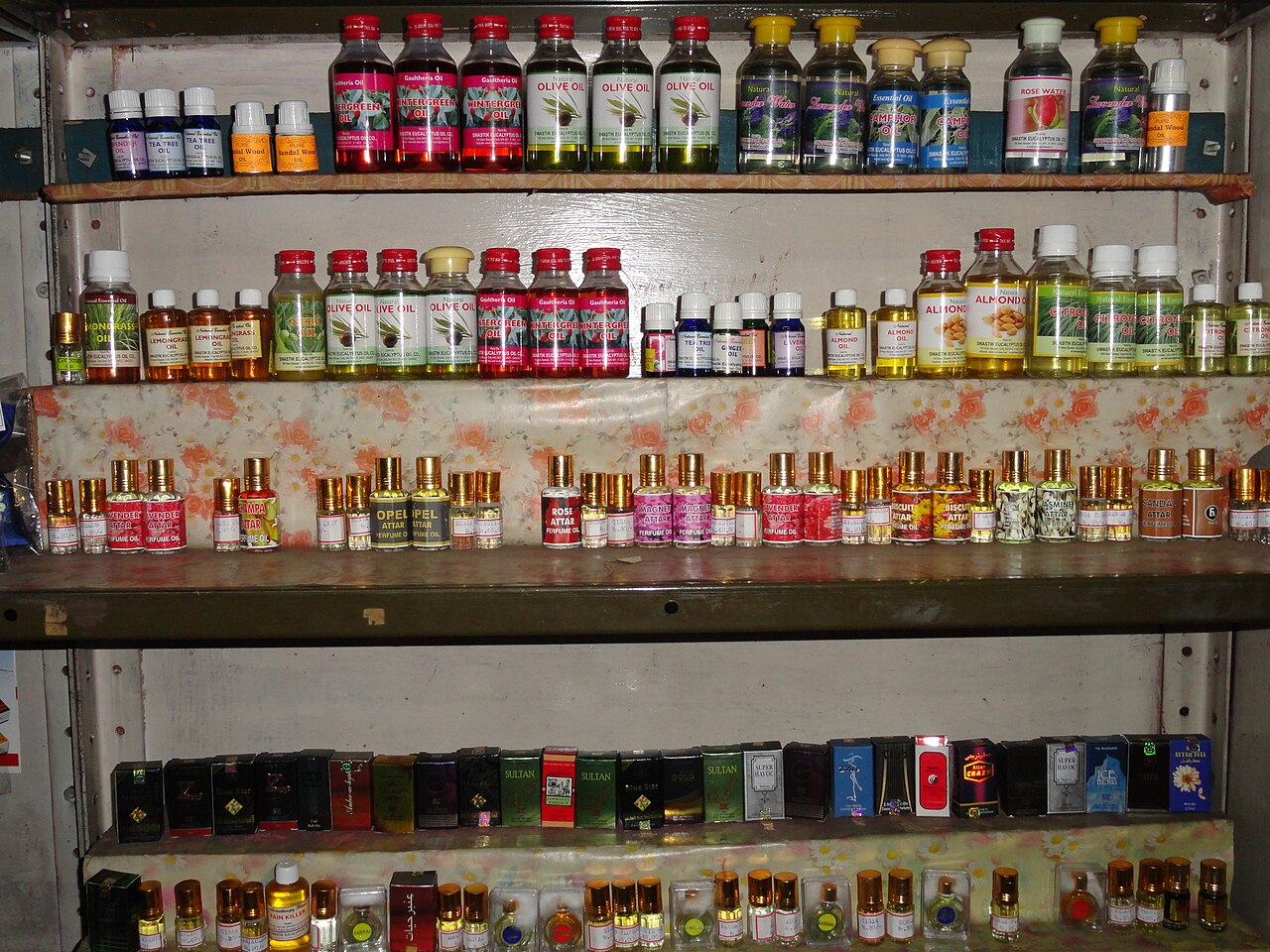
What the phrase synthetic essential oils usually means is synthetic fragrance, a composed blend, and perfumers have used such materials for a long time.
First, consistency. A plant’s aroma shifts with harvest, weather and soil. A lab-made aroma can smell the same in every batch, which is important for a candle brand that wants its signature scent to be repeatable.
Second, range. Some scents are hard or impossible to capture from nature. You cannot distill fresh rain, clean cotton or a sea breeze. Perfumers build those with synthetic fragrance and natural building blocks.
Third, strength and stability. Many synthetic fragrance oils are designed to perform in hot wax, which is a demanding environment. A delicate floral essential oil may flash off or change in the heat.
Natural versus synthetic: a fair comparison
People tend to treat this as good versus bad, and we think that is too simple. Here is a balanced look.

- Essential oils offer a natural, complex aroma, but supply varies and they can cost more.
- Synthetic fragrance offers consistency, variety and strong performance in wax.
- Both can irritate some people, and both should be used with care.
- Natural does not mean harmless, and synthetic does not mean dangerous.
That last point matters. Many essential oils can be problematic around pets, and some can irritate skin or airways, especially if misused. Safety depends on the specific material, the amount, and who is in the room.
Reading labels that promise synthetic essential oils
When a product leans on the phrase synthetic essential oils, or “natural scent”, look for specifics. Useful clues include:

The ingredient list. Does it name specific oils, such as lavender or sweet orange, or does it just say “fragrance” or “parfum”? A named list suggests a botanical-based scent, though blends are common.
Words like “essential oil blend” versus “fragrance oil”. The first implies plant extracts. The second implies a composed fragrance, which may include synthetics.
The brand’s own explanation. Good makers are often open about what they use. If you cannot find a clear answer and it matters to you, send a quick email. Their reply tells you plenty.
If you keep running into synthetic essential oils on product pages, ask yourself what the seller is really telling you. Often it only means the product uses synthetic fragrance made in a lab, which is a perfectly normal way to make a candle fragrance.
Be wary of vague claims such as “pure” or “clean” without detail. Those words have no fixed meaning on a candle label.
Picking the right oil for the job
Here is how we would choose.
For candles, fragrance oils designed for wax generally give the best scent throw. Essential oils can work, but they often smell fainter once burned, and you need a maker who knows how to use them.
For diffusers that use water and a vibrating plate, stick with oils labeled as suitable for that device. Using the wrong oil can damage the machine, and some oils are not meant for ultrasonic diffusers.
For reed diffusers, a fragrance oil in a carrier base is the common approach because it travels up the reeds reliably.
Whichever route you pick, store bottles tightly capped, away from heat and light, and out of reach of children. Dilute essential oils properly before they touch skin, and never swallow them. A few drops go further than you expect, and buying a small bottle first costs little. When shopping for synthetic essential oils or their natural cousins, a small sample tells you more than any description.
If you have pets, asthma or a baby at home, go gentle. Ventilate the room, use less product than you think you need, and ask your vet or doctor about anything you are unsure of.
We enjoy both worlds. A beautifully distilled lavender is a joy, and a well-built synthetic fragrance can do things nature cannot. What bothers us is not the chemistry, it is vague labeling.
So treat the phrase synthetic essential oils as a flag to read more closely. Look at the ingredients, trust makers who explain themselves, and choose based on how the scent smells and how it fits your home. The best oil is the one that suits your space and your household, not the one with the most flattering adjective on the front.
More on this site: Best Cedar Scented Candles for a Cozy, Woodsy Home and Lemon Scent in the Car: Bright, Clean and Easy to Overdo.
Header photo: THANN-Oryza Co., Ltd, Wikimedia Commons (CC BY-SA 3.0).